Algolia is a great search engine. It is also a search engine built for developers.
That distinction matters more than most comparison articles admit. If you have a team of frontend engineers who love writing React components and tuning search relevance through API calls, Algolia is a powerful choice. If you are an ecommerce manager, a DTC founder, or a marketing lead who needs better search and does not have an engineering team on speed dial, Algolia is a problem disguised as a solution.
This is not an Algolia takedown. It is an honest look at why non-technical ecommerce teams look elsewhere, and what the alternatives actually look like.
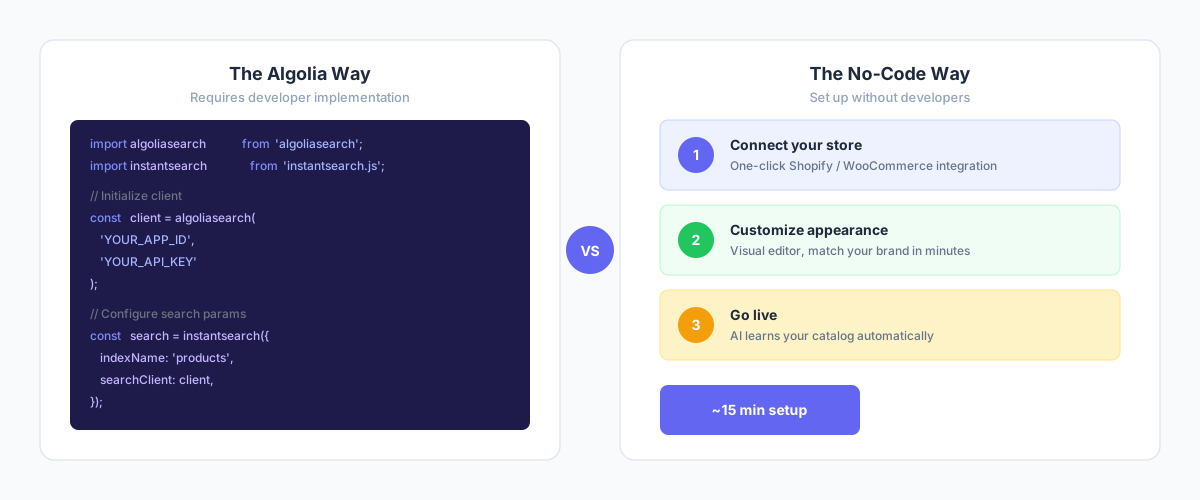
!Algolia complexity vs no-code alternatives
Why Ecommerce Teams Leave Algolia
Three issues come up over and over in conversations with brands that have tried Algolia and moved on.
1. Developer Dependency
Algolia's documentation is excellent - for developers. The InstantSearch library requires JavaScript knowledge to implement. Customizing result rankings, building faceted navigation, and managing index configurations all require engineering time.
For a team without dedicated developers, this means every search improvement goes into the engineering backlog. And in most organizations, search improvements lose priority to feature development, bug fixes, and platform migrations.
2. Configuration Complexity
Algolia gives you incredible control. You can tune ranking formulas, configure custom attributes, set up A/B tests on search parameters, and build complex filtering logic. The problem is that all of this power requires someone who knows how to use it.
A misconfigured ranking rule can bury your best products. A poorly set synonym list can surface irrelevant results. Without ongoing developer attention, Algolia's flexibility becomes a liability.
3. Pricing That Surprises
Algolia's pricing model is usage-based. You pay per search request and per record. For stores with predictable traffic, this can be manageable. For stores that run flash sales, seasonal promotions, or experience viral traffic spikes, the bill can jump significantly in a single month.
Multiple brands have reported receiving invoices 2-3x their expected cost after a successful marketing campaign drove traffic. That is not a pricing model - it is a variable tax on growth.
4 Algolia Alternatives for Non-Technical Teams
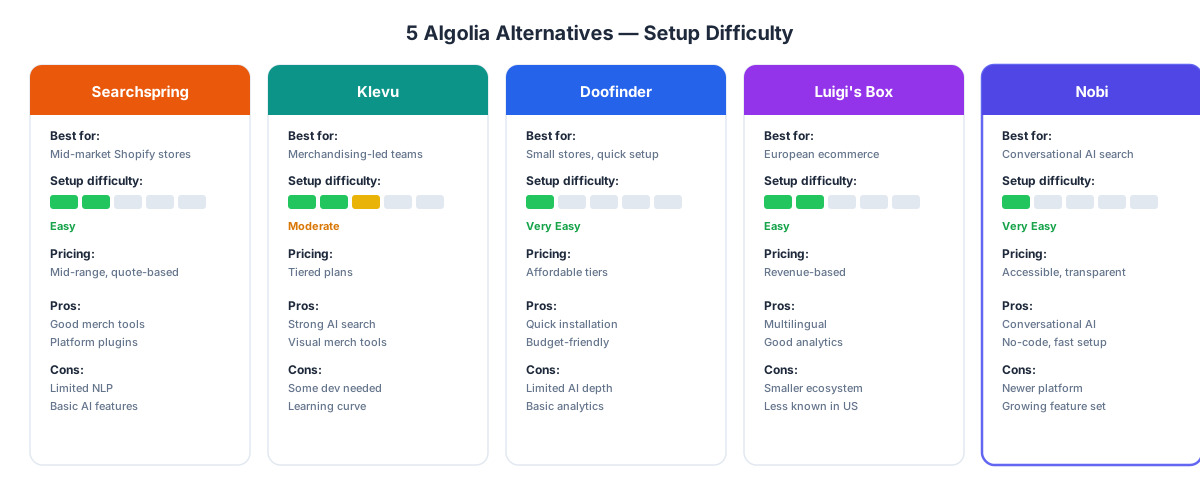
Here are four search tools that ecommerce teams can implement and manage without dedicated developers. Each has trade-offs. None is perfect. But all of them are more accessible than Algolia for teams without engineering resources.
1. Athos Commerce (formerly Searchspring and Klevu)
What it is: Parent company that now houses Searchspring, Klevu, and Intelligent Reach after the three consolidated under one brand. Searchspring and Klevu continue to ship as separate products, but the parent company is the same - if you're shortlisting both as Algolia alternatives, you're really picking between two products of one vendor rather than shopping a competitive market.
Setup difficulty: Low for both. Searchspring runs as a plugin for Shopify, BigCommerce, and Magento. Klevu is Shopify-focused with moderate setup - core install is accessible, though some advanced features need light developer help.
Pricing: Searchspring quote-based, typically $799/month and up. Klevu tiered plans from ~$249/month, with personalization and Smart Category Merchandising priced as add-ons.
Best use case: Merchandising-led teams who want visual rule builders and manual control (Searchspring) or AI-native semantic search with a merchandising dashboard (Klevu).
Searchspring is the safer, more merch-control-heavy pick - visual merchandising and rule builders that non-technical teams can use, but natural language understanding is basic and the core ranking still relies on keyword matching with semantic enhancements. Klevu's NLP engine is genuinely good and understands product-specific language better than most mid-market tools, with a dashboard that gives merchandisers real control over rankings and promotions - the caveat is that advanced features still require developer configuration and the learning curve for the full feature set is not trivial. Both are reasonable Algolia alternatives; know that picking between them is a choice between two products of the same parent, not a choice between independent vendors.
2. Doofinder
What it is: Lightweight search plugin focused on quick installation and affordability.
Setup difficulty: Very low. One-line script installation or platform plugins.
Pricing: Affordable tiers starting low for smaller catalogs.
Best use case: Small to mid-sized stores that need better search without complexity.
Doofinder is the fastest path from bad search to decent search. You can install it in minutes and it immediately improves on most native platform search. The downside is that its AI capabilities are limited. It handles typos, synonyms, and basic semantic matching, but it does not understand complex natural language queries. For stores with simple catalogs, this may be enough. For stores with large or complex product assortments, you will hit a ceiling.
3. Luigi's Box
What it is: AI search and analytics platform with strong European market presence.
Setup difficulty: Low. Supports major platforms with plugin-based setup.
Pricing: Revenue-based model. Scales with your store but can be unpredictable at higher volumes.
Best use case: European ecommerce stores, especially those needing multilingual search.
Luigi's Box does not get much attention in the US market, but it is a solid option for stores that operate across multiple languages and currencies. Its analytics dashboard provides useful insights into search behavior, and the setup is accessible for non-technical teams. The downside is a smaller ecosystem and less community support compared to larger players.
4. Nobi
What it is: Conversational AI shopping assistant that replaces traditional search with dialogue-based product discovery.
Setup difficulty: Very low. No-code setup that connects to your catalog in minutes.
Pricing: Accessible and transparent. No usage-based surprises.
Best use case: Ecommerce teams and DTC brands that want conversational AI without developer resources.
Nobi takes a fundamentally different approach. Instead of a search bar that returns a grid of results, shoppers describe what they want in natural language and the AI guides them to the right products through conversation. This means a query like "I need a gift for my mom who loves gardening and hates anything too trendy" actually works.
The trade-off is that Nobi is a newer platform with a growing feature set. It does not have the merchandising depth of Athos Commerce's Searchspring or the analytics-heavy enterprise features of its Klevu product. But for teams that believe product discovery should feel like talking to a knowledgeable sales associate, Nobi is the most direct path to that experience.
!5 Algolia Alternatives Compared
What to Look for When Switching
If you are evaluating alternatives to Algolia, here are the questions that actually matter:
Can my team implement this without filing an engineering ticket? If the answer is no, you are trading one developer-dependent tool for another.
Is the pricing predictable? Usage-based pricing is fine when traffic is stable. If your store runs sales, promotions, or seasonal campaigns, you need a model that does not punish you for success.
Does it understand how my shoppers actually search? Install the tool and test it with real queries from your search analytics. Type in the long-tail, natural language queries that your shoppers actually use. If it returns relevant results, it passes. If it hits zero-result "no results found" pages, keep looking.
How fast can I see results? The best search tool is the one you actually implement. A slightly less powerful tool that goes live this week beats a perfect tool that stays in the engineering backlog for six months.
Baymard Institute research confirms that most ecommerce sites fail at basic search usability. The bar is low. Any of these alternatives will clear it faster than Algolia can for a team without developers.